
Monday, August 6, 2012
Feb 2012 Consumer Sentiment
Turning
to the original 5 questions in the consumer sentiment survey we again see the 7
rivers region data mirrors the national data. The overall sentiment index
increased from 66.2 to 94.4, and the gains appear to have come – almost equally
– through both the current conditions index and the consumer expectations.


Monday, February 20, 2012
Consumer Sentiment Fall 2011
The first week of August I distributed via email the semi-annual consumer sentiment survey to 1466 past participants in programs related to the Seven Rivers region. I received 324 responses for an overall response rate of 22.1%. The graph and table below clearly show the precipitous drop off in both the regional and national indices. The overall consumer sentiment fell from
80.5 in early April to 66.2 in August, while the national index declined from 68.2 to 54.9. the decline can likely be attributed to recent weak economic data and the uncertainty created by the debt ceiling debate. The table below provides all the data since the inception of the regional survey. Although unlike the national index, we have not fallen below the February 2009 lows.


Wednesday, August 10, 2011
Consumer Sentiment Spring 2011
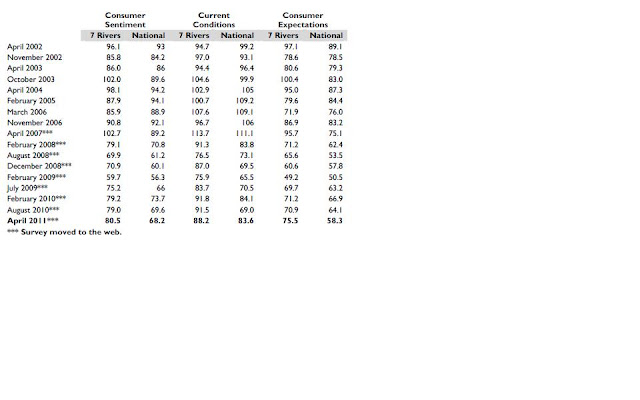
The first week of April I distributed via email the semi-annual consumer sentiment survey to 1466 past participants in programs related to the Seven Rivers region. I received 353 responses for an overall response rate of 24.1%. The table below provides all the data since the inception of the regional survey. We see from August of 2010 to April 2011 the regional overall consumer sentiment index increased slightly from 79.0 to 80.5 overall, while the national index fell slightly over the same period. The Expectations sub index has turned mildly more optimistic rising to 75.5 from 70.9, while the national expectations index over the same period actually fell.

Thursday, March 31, 2011
Consumer Sentiment: Fall 2010
The August 2010 data is below. We can see the Seven Rivers Region consumer sentiment index fell slightly from 79.2 to 79.0 while the national index fell more significantly from 73.7 to 69.6. The April 2011 data will be released at the Economics Indicators Breakfast May 4th.


Sunday, March 6, 2011
Dating the Recession
Tuesday, February 22, 2011
Wisconsin 2010-2011 General Fund Appropriations
This is data from Table 10 from Act 28.
This link which takes you to the "Many Eyes" website in order to have a bit more room to play around with it.
This link which takes you to the "Many Eyes" website in order to have a bit more room to play around with it.
Subscribe to:
Posts (Atom)